


A guide to garment steamers
From daily care to destination dressing, explore our guide to finding the right garment steamer for your wardrobe.

Cold weather asks more of your clothes. Here is how to wash, air, and maintain your winter layers so they stay warm, weatherproof, and ready to wear.
Airing a jacket overnight can do more than a wash cycle. Save the washing machine for when it's truly needed.
Winter dressing is layering. And layering means a laundry pile that suddenly looks a lot more complicated: bulky knits, quilted down, technical shells. The good news is that most outerwear needs washing far less often than you might think. The better approach is to care for each type thoughtfully, and to wash only when necessary.
Washing outerwear
Heavy winter jackets do not need frequent washing. Between washes, the simplest thing you can do is hang your jacket outside to air overnight. A little circulation removes odors, refreshes the fabric, and buys you time. For an extra lift, a few spritzes of Fabric Spray on the lining and outer fabric keep things fresh without the strain of a full wash cycle.
When a wash becomes necessary, reach for an enzyme-free detergent. Enzyme-based formulas break down proteins, which sounds useful until you realize that includes the natural oils in textile fibers. On insulated winter jackets, that matters: stripping those oils can reduce insulation performance over time. Steamery's Delicate Laundry Detergent is enzyme-free and contains lanolin oil, which actively protects and nourishes fibers through the wash.
Down jackets
Of all winter pieces, the down jacket rewards restraint most. Wash it too often and the down begins to lose its loft, and with it, the warmth. Air circulation alone handles most odors well. Hang your down jacket somewhere with good airflow after wearing it and you will find you reach for the machine far less.
When washing down is unavoidable, choose a gentle cycle, a low temperature, and an enzyme-free detergent. Dry the jacket inside out on a low heat setting. Adding Tumble Dryer Balls to the drum helps warm air circulate more evenly, reduces static, and cuts drying time. Pause occasionally to shake the jacket out so the down distributes evenly. The jacket is ready when it is completely dry and smells clean. Any residual damp or odor means it needs more time.
Shell jacket
Waterproof and windproof shells, ski jackets included, are built with a water-repellent membrane or coating. That coating is doing real work, and it needs a little care to keep doing it. One advantage of shell fabrics is that surface dirt tends not to penetrate. Lint, dust, hair, and dandruff can often be removed with a clothing brush as soon as they appear, no wash required. Airing the jacket after use extends the time between washes further.
When washing is needed, skip the standard laundry detergent and avoid fabric softener entirely. Both can degrade the waterproof coating and reduce the jacket's ability to repel water. Always check the care label first, the materials vary, and never exceed the temperature it recommends. Close all zippers and Velcro fastenings before washing to prevent snagging.
Fleece earns its place in winter wardrobes, and keeps it, through one thing: warmth without weight. Natural fleece comes from wool. Most fleece you'll encounter today is synthetic, usually polyester. Both insulate well. Both need a little care to stay that way.
Check the care label before washing, because not all fleece is the same. What they share: a dislike of heat. Wash at a low temperature to protect that dense, soft texture. Before anything goes into the machine, spot-treat stains. Washing a stained fleece without pre-treating it first is one of the faster ways to make a stain permanent.
Wool is naturally antibacterial. That means it needs washing far less often than most people assume. After wearing, hang wool sweaters outside to air. Do it regularly, and you'll find the machine stays out of the equation more often than not.
When a stain appears, act on it straight away. Coffee, berries, chocolate: wool can handle them, but only if you get there first. Spot-treat gently, then let the garment breathe.
If airing overnight doesn't clear an odor, it's time to wash. Hand washing is always the careful choice. A wool cycle on the machine works too, provided the temperature stays low. Heat and agitation together cause wool to shrink, so keep both to a minimum. Use an enzyme-free detergent: enzymes that lift protein stains will also work on wool fiber itself, which is not what you want. Steamery's Delicate Detergent is formulated to clean gently and protect the fiber structure, wash after wash.
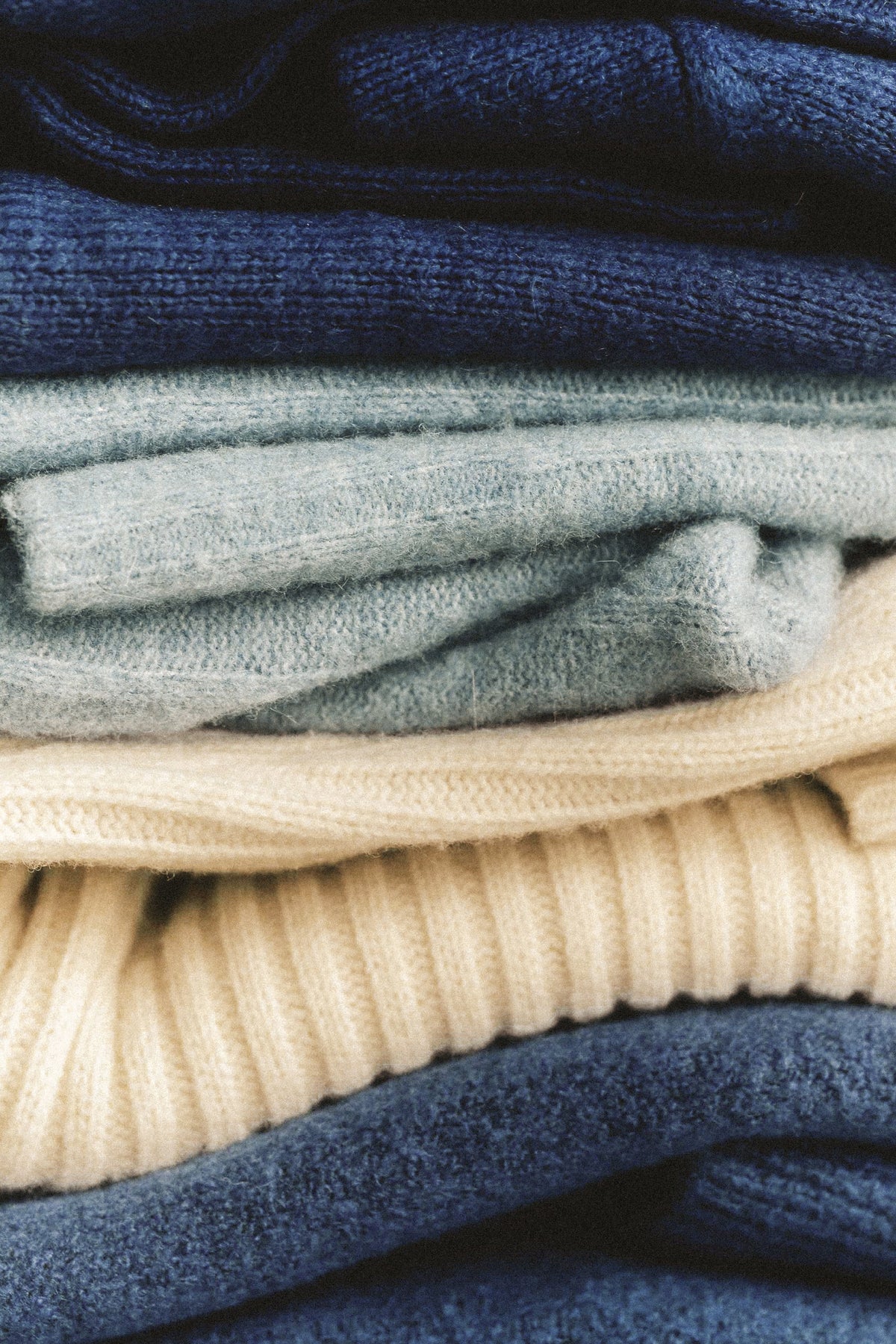
When the season turns, how you store things matters as much as how you washed them. Fold knits rather than hanging them: a hanger stretches the shoulders over time and pulls the garment out of shape. Keep folded pieces stacked loosely, with room to breathe.
For moth protection, a piece of cedar wood placed near stored garments works quietly and without chemicals. Cedar oil spray is another option for tighter spaces. Both deter moths while leaving your clothes exactly as you packed them, ready for next winter.

From daily care to destination dressing, explore our guide to finding the right garment steamer for your wardrobe.

Everything you need to know about caring for wool, from washing and drying to preserving its softness and silhouette.
Cashmere deserves special attention. Discover the small acts of care that preserve its softness, silhouette, and drape.

Pilling is a natural part of a garment’s life. Learn how to restore the natural beauty of the fabrics in your wardrobe.
Please confirm your location