


A guide to garment steamers
From daily care to destination dressing, explore our guide to finding the right garment steamer for your wardrobe.

The fashion industry's environmental impact is well documented. What's less talked about is what happens after you buy the garment. Every wash, every tumble dry, every trip to the dumpster adds up. This is where the real conversation starts.
Buy less. Choose well. Make it last.
A garment doesn't just carry a footprint when it's made. It carries one every time it's worn, washed, and eventually discarded. The full cycle, from production to landfill, puts real pressure on water, air, and soil. Understanding that cycle is the first step to changing it.
The fashion industry generates around 10% of global carbon emissions. It is the second-largest consumer of the world's water supply, and it accounts for roughly 20% of all industrial water pollution worldwide. These are not fringe statistics. They reflect what happens when clothing is produced at scale, at speed, and without meaningful restraint.
Producing a single garment takes significant quantities of chemicals, water, energy, and other natural resources. Progress is being made at an industry level, and more sustainable materials are part of that shift. But the most sustainable garment is still the one that was never produced. That logic applies even before you've taken anything home.
Washing is necessary. But it's also one of the more damaging things you can do to a garment, and to the environment it lives in. Each load uses an average of 19 gallons (72 liters) of water. Each cycle draws energy, releases detergent into the water system, and puts physical stress on fibers that can't be undone.
Microplastics are a particular concern. Studies show that a single load of laundry can release as many as 700,000 microplastic particles from synthetic textiles like polyester. Up to 40% of those particles pass through water treatment facilities and reach lakes and oceans, where they enter the food chain. Tumble drying compounds the problem: more energy, more microplastics, and more wear on the garment itself.
Washing less, and washing with intention, is one of the simplest ways to reduce this. Steamery's fabric care range is designed to support that, giving clothes the gentlest possible clean without unnecessary cycles or harsh chemistry.
In 2017, the US Environmental Protection Agency reported that 16.9 million tons of textile waste was generated in the United States alone. Only 15.2% of that was recycled. The rest, roughly 11.2 million tons, went to landfill.
Once there, it stays for a long time. Many textile materials take over 200 years to decompose. As they break down, they release methane and leach synthetic dyes and toxic chemicals into soil and groundwater. Fashion waste is not an abstract problem. It is a slow, ongoing contamination.
Caring for the clothes you already own is a direct response to all of this. It extends a garment's life, delays its disposal, and reduces the pressure to replace it. That is not a small thing.
Most clothes leave a wardrobe too soon. Shape lost to too many hot cycles. Color washed out over years of unnecessary rinses. The fix is simpler than most people expect: wash less, wash right, and mend what can still be mended.
Start with air. Wool, in particular, is naturally self-cleaning. For most garments beyond underwear, if it doesn't look or smell wrong, it doesn't need a wash. Hang it out instead.
When the garment needs more than air, steaming clothes is one of the most effective steps you can take. Steam kills bacteria, reduces odor, and refreshes a piece in minutes. It uses less energy than a full wash and puts far less stress on the fabric. For anything that just needs a light lift, a quick mist leaves it smelling clean and feeling revived. For sturdier pieces, like outer jackets and tailored suits, a firm brush is often all it takes to clear dust and surface marks.
Targeting a stain directly is almost always better than washing the whole garment. Spot clean clothes as soon as something happens. The fresher the stain, the better the result, and the more often you skip a full wash.
When a full wash is necessary, hand washing clothes is the gentler choice. It gives you control over pressure and temperature, and causes less friction than a machine cycle. Watch our tutorial to see how straightforward it is. If you need to machine-wash, use a gentle cycle and choose a detergent matched to the textile. Our Laundry Detergents are effective from 30°C, which is easier on both your garments and your energy bill.
For pilling and lint, a Fabric Shaver brings a garment back. What reads as old and tired is often just surface texture. Run a Fabric Shaver over it and the difference is immediate.
And when something is broken, fix it. A loose hem, a missing button, a small tear. Knowing how to mend clothes is not a specialist skill. It is just the next step in caring for what you already have.
Sources: World Economic Forum, EPA United States Environmental Protection Agency, RoadRunner, University of Plymouth, Xerox Technologies.

From daily care to destination dressing, explore our guide to finding the right garment steamer for your wardrobe.

Everything you need to know about caring for wool, from washing and drying to preserving its softness and silhouette.
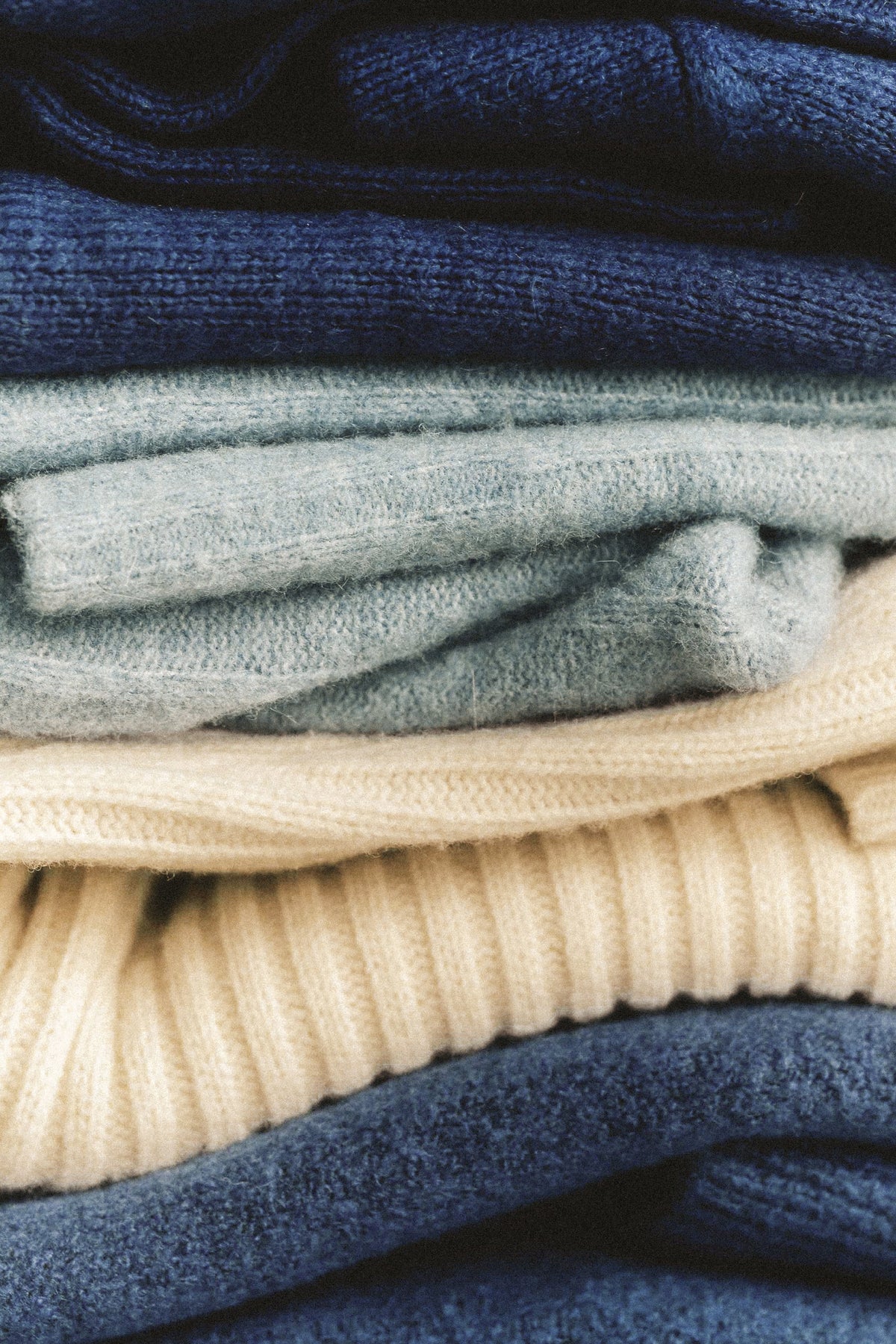
Cashmere deserves special attention. Discover the small acts of care that preserve its softness, silhouette, and drape.

Pilling is a natural part of a garment’s life. Learn how to restore the natural beauty of the fabrics in your wardrobe.
Please confirm your location